Hobby Farms


Livestock & Pets - The Basics of Beekeeping
New Beekeepers: Learn the basics of keeping bees and harvesting honey.

by Cherie Langlois

About the Author
Cherie Langlois is a freelance writer and hobby farmer based in Washington.

Basic beekeeping doesn’t require huge amounts of money, time or space, and it can be done just about any place where flowers bloom. If like to drizzle amber honey on your morning toast or into green tea, you might want to give beekeeping—or apiculture—a try.

In this article ...

  • Beekeeping Equipment Checklist
  • The Hard-Working Honey Bee
  • History of Bees and Honey
  • Read More About Beekeeping
  • Tips for Beginning Beekeepers
  • Marketing Your Honey Harvest
  • Keeping a Healthy Hive
  • Africanized Honey Bees
  • About Bee Stings
  • Harvesting Honey and Honey Types
  • Our country could certainly use some new beekeepers. According to Troy Fore, executive director of the American Beekeeping Federation, there are an estimated 100,000 hobby beekeepers in the United States, down from 200,000 in the 1970s.

    Urbanization has played a role in this decline, along with the spread of parasitic mites that have decreased production and increased beekeeping costs.

    “The possibility of being stung, problems with mites, and the labor involved puts potential beekeepers off,” says Jack Robertson, a beekeeper with 25 years experience who keeps 250 hives near Olympia, Wash., with his wife, Virginia.

    Beekeeping Equipment Checklist
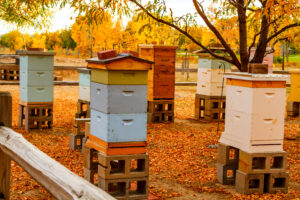
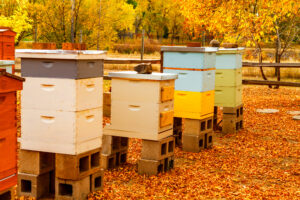
    To begin beekeeping with one Langstroth hive, you’ll need the following:

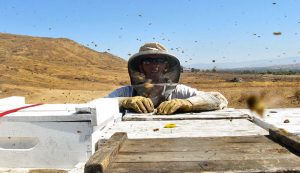
    • A veil, bee suit and gloves: Worn properly, protective clothing helps keep stings to a minimum.
    • Smoker: This implement produces a cool smoke that settles the bees by causing them to gorge on honey.
    • Hive tool: A steel tool used to open the hive, scrape wax/propolis and handle frames.
    • Hive stand: This improves air circulation by elevating the hive. 
    • Bottom board: The bottom floor of the hive.
    • Two deep hive bodies: These boxes are used as brood and food chambers by the bees.
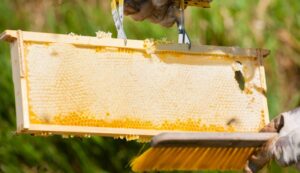
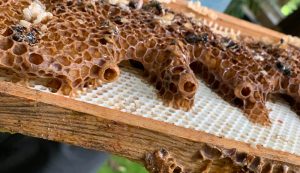
    • Ten frames with foundation per hive body: Each frame holds a sheet of beeswax or plastic foundation. Secreting wax from specialized glands, the bees build hexagonal cells onto the frames. Many beekeepers use nine.
    • Shallow honey supers with frames: The bees store surplus honey in these boxes.
    • Queen excluder: A frame and grid that keeps the queen from entering the honey supers to lay eggs (not used by all beekeepers).
    • Outer cover: Protects hive from the elements.
    • Feeder: Provides bees with supplemental feed such as sugar syrup when stores are low.

    Top

    But small-scale beekeeping doesn’t require huge amounts of money, time or space, and it can be done just about any place where flowers bloom, maintains Howland Blackiston, a Connecticut beekeeper with over 20 years of experience and author of Beekeeping for Dummies.

    A few healthy hives will reward you with pounds of surplus honey to savor yourself, bestow on neighbors or sell at your local farmer’s market. As they forage in your garden, the bees will also perform the essential job of pollination—the transfer of pollen that allows plants to reproduce.
     
    “I’ve witnessed the miracle in my own garden: more and bigger flowers, fruits and vegetables,” says Blackiston, adding that many gardeners report seeing fewer Honey bees these days.

    “Millions of colonies of feral Honey bees have been wiped out by urbanization, pesticides and parasitic mites. Backyard beekeeping has become vital in our efforts to establish lost colonies and offset the natural decrease in pollination by wild bees.”

    Top

    The Hard-Working Honey Bee
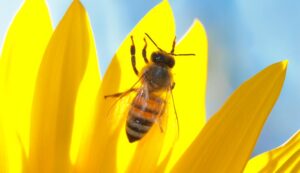
    The Honey bee, Apis mellifera, is an amazing creature and—except for the drones—the ultimate workaholic. A native of Europe, Asia and Africa, this insect lives in a complex, three-caste society composed of thousands of bustling individuals.
     

    Read More About Beekeeping

    Article: Bees Threatened by Colony Collapse

    Find: Local Honey, Local Food

    BooksBeekeeping Basics

    • Beekeeping for Dummies by Howland Blackiston (Hungry Minds, Inc.)
    • The Hive and The Honeybee edited by Joe M. Graham (Dadant & Sons, Inc.)
    • The Beekeeper’s Handbook by Diana Sammataro, Alphonse Avitabile, and Roger A. Morse (Cornell University Press)

    Websites

    Top

    Although their lives are fleeting by human standards, queens, workers and drones cooperate to keep the colony going from year to year and form new colonies by swarming.

    Workers nurture their egg-laying queen, keep the hive cleaner than our own homes, protect the colony from raiders, and fly thousands of miles to gather food.

    Miraculously, they manage to do all this without cell-phones or e-mail, communicating instead through the emission of chemical substances called pheromones and by performing dances in specific patterns.

    Unlike that bad-tempered yellow jacket buzzing around your hamburger, Honey bees are vegetarians that obtain their protein from pollen and their carbohydrates from flower nectar.

    After the worker bee industriously gathers these provisions, she hands them off to a younger worker to deposit in hexagonal wax cells. The bees add enzymes to the nectar, then fan this concoction with their wings to evaporate the water, and gradually it turns to thick, sweet honey.

    Come winter, the clustering bees will use these food stores to generate heat, contracting their wing muscles to keep the hive a toasty 92 degrees F.

    Top

    History of Bees and Honey
    Primitive societies apparently appreciated the sweetness of honey as much as we modern humans. Cave drawings found in Spain from around the year 6000 B.C. depict human figures scaling a cliff to snatch honey from a wild hive.

    Marketing Your Honey Harvest
    “You won’t get rich as a beekeeper,” says Howland Blackiston, author of Beekeeping for Dummies. “But you can make a reasonable return on your investment by selling your honey.” Try marketing hive products through the following outlets:

    • farmers’ markets
    • health-food stores
    • church fairs/synagogue bazaars
    • independently-owned food markets
    • craft and gift shops
    • gardening centers
    • holiday bazaars
    • county fairs

    Top

    Later, ancient peoples of the Middle East, the Mediterranean and Northern Europe learned to exploit the bees’ propensity for settling within dark spaces after swarming.

    They build hives out of logs, pottery vessels, and straw or wicker containers called keps. Unfortunately for the bees, early beekeepers usually couldn’t remove honeycomb unless they killed the colony with burning sulfur or boiling water.

    In 1622, the first hives of European Honey bees made the journey from England to the Colony of Virginia. But it wasn’t until 1851, when pastor Lorenzo Langstroth of Philadelphia created a wooden hive with movable frames, that beekeepers were able to effectively—and benignly—manage their colonies.

    Honey bees soon reached North America’s West Coast and colonized most of the rest of the world as well. Today the Langstroth hive is the most commonly used hive around the globe.

    Top

    Tips for Beginning Beekeepers

    “The very first thing a beginning beekeeper should do is get a good book on the subject, one that’s up-to-date and easy to follow,” advises Blackiston.
     

    Africanized Honey Bees
    While these bees look nearly identical to our mild-mannered European strains, they’re more easily disturbed at the hive and exhibit much stronger defensive behaviors against intruders. Brought to Brazil in 1956, some African bees escaped and hybridized with their European counterparts.

    Since then these fierce, disease-resistant hybrids have spread north through Central America, Mexico and the southern United States. Increased fear of bees has followed in their wake—bad news for beekeeping.

    “If your area has them, you must manage your colony carefully to prevent your own bees from hybridizing and becoming more aggressive,” says Howland Blackiston, a Connecticut beekeeper.

    Top

    He suggests beginners look for a book with good illustrations and photos (check Amazon online) and surf the web for bee resources. “Join a bee club,” he adds. “That’s a great way to meet other beekeepers and latch onto a mentor.”

    Before you officially start keeping bees, however, find out if your community prohibits or restricts beekeeping, or requires registration of your hives. And try following a season through to see what blooms in your area, says Jack Robertson.

    Near the Robertsons’ home in western Washington, for instance, Honey bees gather nectar and pollen from a variety of sources that include alder, skunk cabbage, scotch broom, camas, dandelion, poppies and blackberries—basically anything that flowers.

    “Bees will fly up to three miles for nectar, but the farther away they have to fly the shorter their life span [due to wing damage and predation],” he says.

    In choosing a spot for your new apiary, look for a site that receives plenty of sunshine throughout the day (some shade is necessary in hot climates) and has good air circulation and drainage. Picking a secluded area behind a fence or screen of trees will help prevent vandalism and conflicts with bee-wary neighbors.

    Workers tend to zoom up as they exit the colony, so if you avoid putting the hive too close to places frequented by children, pets, pedestrians or traffic—and aim the entrance away from these areas—your bees will be unlikely to cause problems. Make sure the bees have access to a nearby natural or artificial water source so they won’t make a beeline for your neighbor’s leaky water spigot. Honey bees use large amounts of water to regulate temperature and moisture levels in the hive during summer. 

    Winter is a good time to order your bees and beekeeping paraphernalia so you can get started in the spring. You can purchase equipment used, new, or even make it yourself, but many experts recommend that beginners opt for new, since second-hand supplies may harbor disease.
     
    Prices vary; expect to spend about $200 to $400 on a hive, equipment, tools and medication, Blackiston says. You can order your first package of disease-free bees through a reputable supplier (yes, shipped via UPS or U.S. mail) for around $50-$70—one package equals about 11,000 bees.

    Keep in mind that Honey bees come in a variety of types and hybrid strains. For beginners, Blackiston favors the popular, productive Italian race, while the Robertsons recommend the mellow Carniolan.

    Start with one hive until you get the hang of things, then consider expanding to two during your second year, Blackiston says.
     
    “Recognizing normal and abnormal situations is easier when you have two colonies to compare, and a second hive enables you to borrow frames from a stronger colony to supplement the one that needs a little help.”

    Top

    Keeping a Healthy Hive

    Beekeeping chores change throughout the year and the yearly “to-do” calendar will vary as to where a beekeeper lives. “When the bees are actively foraging nectar and pollen, you inspect your hives several times during the season,” says Blackiston. “The busiest times are at the start and end of the season, when you get them going for the year (spring) or put them to bed for the winter (autumn).”

    A beekeeper conducts inspections to determine the health and productivity of the colony, Blackiston explains. When you examine frames, you’ll be looking for signs that the queen is alive and laying eggs like she should: capped brood in a compact pattern, tiny white eggs at the bottom of cells. Depending on the time of year, you’ll also assess whether the colony needs additional food stores, more nectar storage space, increased ventilation, medication, swarm control measures, a new queen and more. 

    Your colony will also require protection from parasites, diseases, pesticides and predators. Varroa mites, a pest from Asia that arrived in the United States during the 1980s, can destroy a colony within a few seasons. Foulbrood, a bacterial disease, kills larvae and pupae, while the protozoan disease Nosema targets the adults’ intestinal tracts. To combat these and other health problems, the Robertsons medicate their colonies with miticides and antibiotics in the fall and spring. They run hot-wire around their apiaries to protect the hives from honey-hungry black bears. Other pesky predators includeants, rodents and raccoons.

    Top

    About Bee Stings
    Honey bees are basically harmless insects when not actively defending their hive from an intruder. But for a beekeeper who works with thousands of bees per hive, an occasional sting comes with the territory. The bad news? Bee stings hurt (expect some swelling, itching and redness), and for a small number of people can lead to life-threatening allergic reactions. When stung often enough during the season, however, beekeepers like Robertson and Blackiston report that they build up a tolerance and experience little in the way of side effects.

    Still, you can do plenty to reduce the chances of being stung while working your bees. “The main thing is to have your bee gear on and have it on correctly,” says Robertson, who recently received a sting on the ear when he neglected to zip his veil completely. “Start your smoker up and before you do anything to the bees, puff once or twice into the bottom of the hive. Then, before you completely open the hive, puff them again in the top. But don’t over-smoke them.”

    Blackiston offers these additional tips to keep you from irritating the bees and crying ouch: Try to inspect your hive during pleasant daytime weather, when most of the bees are out foraging. Take your time and keep your movements gentle and calm—no swatting! Get a good grip on the frames so you don’t drop them and avoid causing other bee-disturbing vibrations. Wear clean, light-colored clothing; bees seem to dislike strong body odor and dark colors. Finally, don’t excite the bees into a feeding frenzy by leaving sugar syrup or honey in open containers near the hive.

    If you do get zapped, remove the stinger by scraping it out with your fingernail so you avoid squeezing more venom into your skin. Puff smoke on the site to cover the alarm pheromone thatmay attract other bees (workers only sting once and the one that got you will soon die). Wash and dry the area and apply an ice pack. Antihistamines can help ease swelling and itching. If you’re stung on the mouth or throat, experience swelling in these areas, difficulty breathing, or signs of shock, call 911. To be on the safe side, Blackiston keeps an EpiPen emergency sting kit—available by prescription—on hand in case a guest has a severe allergic reaction.

    Top

    Harvesting Honey and Honey Types

    It’s no wonder the Greek and Roman gods favored offerings of honey. Ranging in shade from pale gold to amber to rich brown, this viscous fluid is as lovely and fragrant as it is sweet. Honey, used as a sweetener long before white cane sugar, is a pure and natural food that needs no processing to make it fit for human consumption. Valued as a folk medicine since ancient times, honey has antimicrobial and wound-healing properties and also contains healthful antioxidants. Last year Americans consumed over 381 million pounds of this sticky ambrosia.

    Beekeepers can harvest honey in several forms, including comb—which requires special hive equipment—and extracted, the most popular type here in the States.  After the first season, a healthy hive can produce anywhere from 45 to 100 pounds or more of extracted honey each year, depending on where you live, the weather and other factors. To harvest this treasure trove, you’ll need an uncapping knife to cut open the wax combs, an extractor to spin the honey out, and a strainer to filter out bits of wax and other debris. A five-gallon plastic bucket with a spigot is useful for bottling the strained honey. Extractors aren’t cheap ($250 and up), but beekeepers with only a few hives can check into renting or borrowing one from their local beekeeping association.

    If the only honey you’ve tried is commercial clover, you’ll be surprised to discover that honeys made from different nectar sources have varied tastes, colors and aromas. Sweet-scented lavender, delicately flavored fireweed, dark buckwheat: these honeys acquire their names from the dominant flowers visited by the bees. Beekeepers place their hives within large tracts of the specific source and harvest honey immediately after the bloom finishes. When bees gather nectar from a wide variety of nectar plants—as they do for most hobby beekeepers—the resulting harvest is called wildflower honey.

    The Robertsons’ hives yield wildflower, raspberry, fireweed, blackberry and cooking honey. They sell these natural products from home and from their booth at the Olympia Farmer’s Market. For every 100 pounds of honey harvested, the beekeepers glean one or two pounds of beeswax, which Virginia Robertson transforms into long-burning, dripless candles and honey-scented figurines. “I also sell a lot of wax to customers who make salve, soap and ointments,” she says.

    Another product valued by beekeepers is propolis, the sticky, plant-derived substance bees use for hive improvements. “Propolis has remarkable antimicrobial qualities; the Chinese have used it in medicine for thousands of years,” explains Blackiston.

    Many beekeepers also obtain income by renting their bees out to pollinate crops. With their bodies coated in branched, pollen-snagging hairs, Honey bees can efficiently pollinate hundreds of different plants as they collect nectar and pollen for the colony’s use. About 90 crops in our country depend, at least to some extent, on bees for pollination, including apples, alfalfa, blueberries, cotton and cucumbers. The increased agricultural production connected to Honey bee pollination is estimated to exceed a whopping $14 billion a year.

    If the art of beekeeping seems a bit complicated—especially after you start dipping into bee books and buzzing about the net—don’t despair. “Get in touch with local beekeepers. They’re more than happy to share the information they have,” says Virginia Robertson, who wryly notes that her husband sometimes overlooks customers when he’s discussing beekeeping with someone. “Beekeepers love to talk bees.”

    Top

    This article first appeared in the October/November 2003 issue of Hobby Farms magazine. Pick up a copy at your local newsstand or tack and feed store. Click Here to subscribe to HF.


    Your Email:
    Get the latest news, tips and
    free advice every month