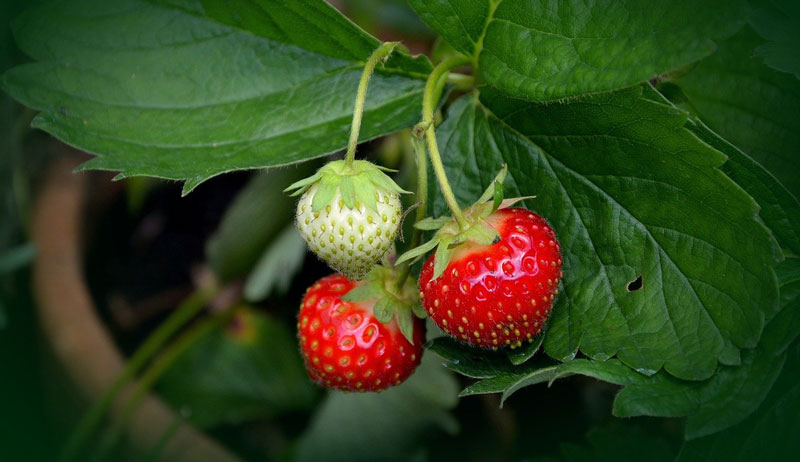
Strawberries are about to become an excellent choice for small farmers.
By Rick Gush
|
About the Author
Rick Gush is a freelance writer and small farmer based in Italy. |
The agricultural juggernaut in California has produced increasingly more millions of strawberries every year for the past 40 years, increasing the supermarket customer’s awareness and demand for this delectable fruit.
American consumers are now accustomed to consuming more fresh strawberries than ever. But now the juggernaut has hit a large rock. Some experts are predicting that the crop being exported from California could soon drop by half.
Why? Beginning in 2005, the soil fumigant methyl bromide will be banned for strawberry-crop use. Hooray! But the farmers are not sure what to do next. Methyl bromide sterilizes the planting beds prior to planting, and it has been that sterilization which has most significantly increased production on the large operations. Strawberries are extremely susceptible to fungus and diseases, so the practice of covering the beds with plastic and pumping in methyl bromide gas has worked wonders. The vapors that penetrate the soil effectively kill all the nearby fungus and weed seeds before planting, leaving a nice, sterile and hospitable environment for the young plants. However, methyl bromide’s days are numbered in California and farmers have yet to devise an alternate, effective treatment.
Methyl Bromide Some alarmists believe that the ban on methyl bromide may well kill the California strawberry industry. (Mexico, by contrast, is not scheduled to stop methyl bromide use until 2015.)
On the other hand, the agricultural/educational complex does not give up easily, and a large number of university studies are busily determining what options might be available and most efficient when the time comes to forever forego methyl bromide.
Some alternative treatments are getting close to being as effective for either fungus control or weed prevention, but not both simultaneously. Organic gardeners regularly practice strict hygiene practices, and use sulfur, steam injectors and improvised plastic furnaces.
The answers for large strawberry farmers will probably come from similar socially responsible techniques. |
|
What does this mean to small farmers? Consumers accustomed to fresh strawberries may be more amenable to U-Pick operations. A small farmer starting an operation this season could have most of the kinks worked out of a profitable annual strawberry patch by the time the ban on methyl bromide takes effect.
U-Pick StrawberriesFor small farmers, operating a popular public picking field is the single most profitable method of strawberry production. Being able to charge higher than wholesale prices and simultaneously avoid the high costs of harvesting can be a great combination. U-Picks are everywhere, from Arkansas to Newfoundland.
U-Pick setups are often fairly successful, even on small plots. The key is location and promotion. Small plots, perhaps even as small as an eighth of an acre, can thrive if they are located in a highly visible location. More remote picking operations will require some energetic promotion to bring out customers. It’s common in the northern United States and Canada for strawberry farms to offer additional rural recreation such as petting zoos, hay rides, rustic craft sales and other self-service crops such as pumpkins, orchard fruit and Christmas trees.
The rule of thumb for U-Pick operations is that one acre needs at least 2,000 otherwise unserviced customers living within 45 miles. If you think you have a sufficient potential customer base, and that you have the combination of farming skills and promotional flair, strawberries could be a tasty part of your farm’s future.
Growing StrawberriesThe cultural key to growing strawberries begins with good drainage. The traditional growing method involves planting on a raised mound to ensure this drainage. Even the precise placement of the new plants requires attention to depth because a plant buried too deeply will suffocate and rot, whereas placing it too shallow will leave the crown of the plant exposed. Garden books are fond of showing three Goldilocks-style planting diagrams: one with the new plant planted too deeply, one that’s too shallow and finally, one that’s just right. Some are now adding a fourth illustration, showing the roots going sideways, which is another mistake. It might seem simple enough, but just getting the plants situated correctly is an important procedure.
Strawberries thrive on cool nights and cool, sunny days when they are setting fruit, so plants grown in coastal and northern locations produce their crops in the summer. In warmer areas like Florida, where they are quite active in growing strawberries for the national supermarkets, the crop timing is pushed around to produce strawberries both earlier and later than the huge summer crop.
The strawberry plants themselves can live and produce fruit for many years. At the intense California agribusiness farms, strawberries are grown as annuals that are planted in the fall for harvest the following spring, but almost everywhere else the plants are grown for several years. Fruit quality is usually best in the first year, and disease problems do develop more in the subsequent years, but the expense of replanting justifies multiple-year cropping in most small-farm situations.
Strawberry Types & Varieties
There are three main types of strawberries and hundreds of varieties of each of the types. Because the seed catalogs, with all their luscious illustrations of tempting red fruits, usually come from some other state, their advice concerning types and varieties can be confusing. Your best bet is to ask around among your neighbors and the local agricultural savants like the Cooperative Extension, nod politely, experiment a little and then make up your own mind. What works for the fellow on the other side of the hill might not work as well on your farm.
The three different types are commonly referred to as June Bearing, Day Neutral and Everbearing. June Bearing types, which are also called Short-Day, are the most commonly used varieties for commercial growers. These plants are generally planted in the fall and then produce their best crop of fruit the following year. Day Neutral types are usually spring planted, and they produce fruit the first year they are planted. Everbearing varieties are planted at various times, and this type produces two smaller crops, one in late June and the second in late August.
|
Odd Strawberry Facts
- In warm climates like Florida, growers can trick strawberry plants into thinking they’ve experienced winter by keeping them inside a lighted, refrigerated trailer truck for a month or so. The clever growers can then plant the artificially vernalized plants in the summer to produce a quick crop in November, when prices are high.
- Want to start your own breeding program? Strawberry seeds are easy to get. Just take fruit and put it in a blender for a moment. The good seeds won’t float, so you can pour off the pulp, juice and water and get the seeds at the bottom.
- If you read Hobby Farms “Happenings” Fall/Winter 2001 issue, you know that using a red plastic mulch actually helps the berries get bigger and sweeter! It’s an amazing technique, but finding inexpensive red plastic film is sometimes difficult.
|
Camarosa, a June Bearer, has recently been the overwhelmingly favorite California commercial variety, and is replanted every year as an annual crop. U-Pick operations across the United States, Canada and Europe tend to grow lots of June Bearers too, but they keep the beds going and get two or three years of production from each planting.
There are three types, but there are thousands of different varieties. There are more varieties of strawberries than a person could ever hope to grow, and many new varieties are introduced every season. There are also a few European heritage varieties that don’t appear in most American catalogs. Strawberries hybridize easily, and farmers have been busy for the last century breeding tolerance to various natural elements—earliness or lateness, color, flavor retention and storage capacity.
Planting Most U-Pick farmers replant some parts of their operation every year in order to have a continually refreshed plant stand. A strawberry farmer usually looks at all the beds after the harvest season and decides which beds to replant, and which beds to leave for another year. Situations change from year to year, and so do the decisions about replanting. Particularly healthy and productive beds will likely be left for another year, whereas beds that experienced problems during the season are likely to be replanted. Strawberry beds can grow for 10 years in the most favorable conditions, but the fruit crop yield always seems to be highest in the bed’s first year and declines thereafter. Additionally, some pests and diseases become more problematic in older beds.
During the cold months (whether or not they are covered with snow), strawberries benefit from being mulched. Straw is a common and inexpensive mulch material but any clean, dry organic material could work. The mulch provides an important insulation from the cold, but should not be applied until after a hard frost. In the spring, leave a third of the winter cover mulch in place and let the plants grow up through it. The remaining mulch will provide many benefits including nutrition, hygiene, weed control and most importantly, keeping the fruit from contacting the soil.
Strawberry PestsA relatively new buzzword in agriculture today is “prevention.” Farmers are finding out that, as in so many other parts of our lives, prevention is by far the most effective disaster-evasion technique. No longer do farmers wait until bugs appear and then blast them with the strongest pesticide they can muster. Today, a savvy farmer knows exactly what could destroy his crop, and how to efficiently provide protection beforehand.
The main pests of strawberries are fungi. Once a fungus infection has started, a farmer probably won’t be able to stop it. Repeated mass doses of fungicides may slow the progress of the disease, but they won’t stop the problem. Strawberry plants are susceptible to several different fungal diseases, and the fruit is susceptible as well. The way plants and fruit become infected is through soil contact, so much time is spent arranging so that neither the leaves nor fruit come in contact with the ground. Growers that do use fungicides use them almost exclusively as preventative treatments before the fungus has a chance to start growing.
Amusingly, the list of strawberry-plant pests must include itself. Plants in a new bed will produce a number of runners in the spring, and while these are wonderful for filling in the bed and multiplying the investment in plantlets, you must take care to thin these runners or they can create an overcrowded bed. Keep two to three inches between plants after the runners are out. Having too many plants can starve the whole bed and can restrict pollination and fruit size.
Weeds are another potential problem. Strawberries like to grow in rich soil, and so do weeds. Planting rows are often covered with a plastic film to keep the weeds from growing and this technique also prevents the ripening fruit from contacting the soil. The raised mounds are slightly easier towork on and harvest from as well.
There are many insects that can be big trouble for a strawberry patch. Whiteflies and spider mites top the list and can multiply from a few individuals to a dangerous infestation within a few weeks when conditions are right. While preventative soap and essential-oil sprays can discourage unwanted visitors, the latest commercial techniques involve the extensive use of beneficial bugs such as predatory mites for combating whiteflies and spider mites.
Finally, the last two strawberry enemies on the list are birds and deer. If you have a wildlife problem, then your fencing, netting and scarecrow techniques should be important considerations during the crop-planning process.
Although it might sound as if strawberries are susceptible to every problem known to farm science, each of these threats can be dealt with preventatively, and no single factor should ruin a crop.
Strawberries & Dollars
For little plants, strawberry bushes can produce an amazing amount of fruit. The fields on the big farms in California yield 25 tons of fruit per acre. The average yield on a North American U-Pick operation is between 5,000 and 8,000 pounds per acre. In just about any garden, an 18-foot row, 18 inches wide, can produce 30 to 45 pounds of fruit.
There is a lot of money to be made on strawberries. The big farms of California bring in $400 million annually, and Florida produces hundreds of millions each year too. The U-Pick operations in North America bring in many millions of dollars themselves. Impressive as that might be, Belgium actually considers itself the center of the strawberry universe, and boasts an enormous production. Without a doubt, there are a lot of people making money growing strawberries, and this is a crop for which there are not any major subsidies.
We do know that some growers make thousands of dollars of profit from very small operations, but of course that does not mean you will too. Profit, the common goal of farming operations, is a slippery and elusive target, and doesn’t come to anyone in the first year. The capital investment of establishing a field will likely take several years to recoup.
Fresh berries don’t last long, and they need to be picked almost every other day, which is why the labor costs for harvesting strawberries is so extremely high. But while the most profitable method for many small farmers is the U-Pick operation, perhaps the idea of strangers trampling over your carefully crafted rows doesn’t appeal to you.
The answer is to be a good scout and be prepared, because both producing strawberries and making money require good planning.
This article first appeared in the Summer 2002 issue of Hobby Farms magazine. Pick up a copy at your local newsstand or tack and feed store. Click Here to subscribe to HF.